Monday, 5 December 2011
Photos from Apoolo Na Angor on the 30th
Moses outside the buildings of Apoolo Na Angor - he started this in 2003. His focus is on Health/hygiene training, Sewing skill training and Agricultural traing. Beekeeping then falls nicely into this strategy.
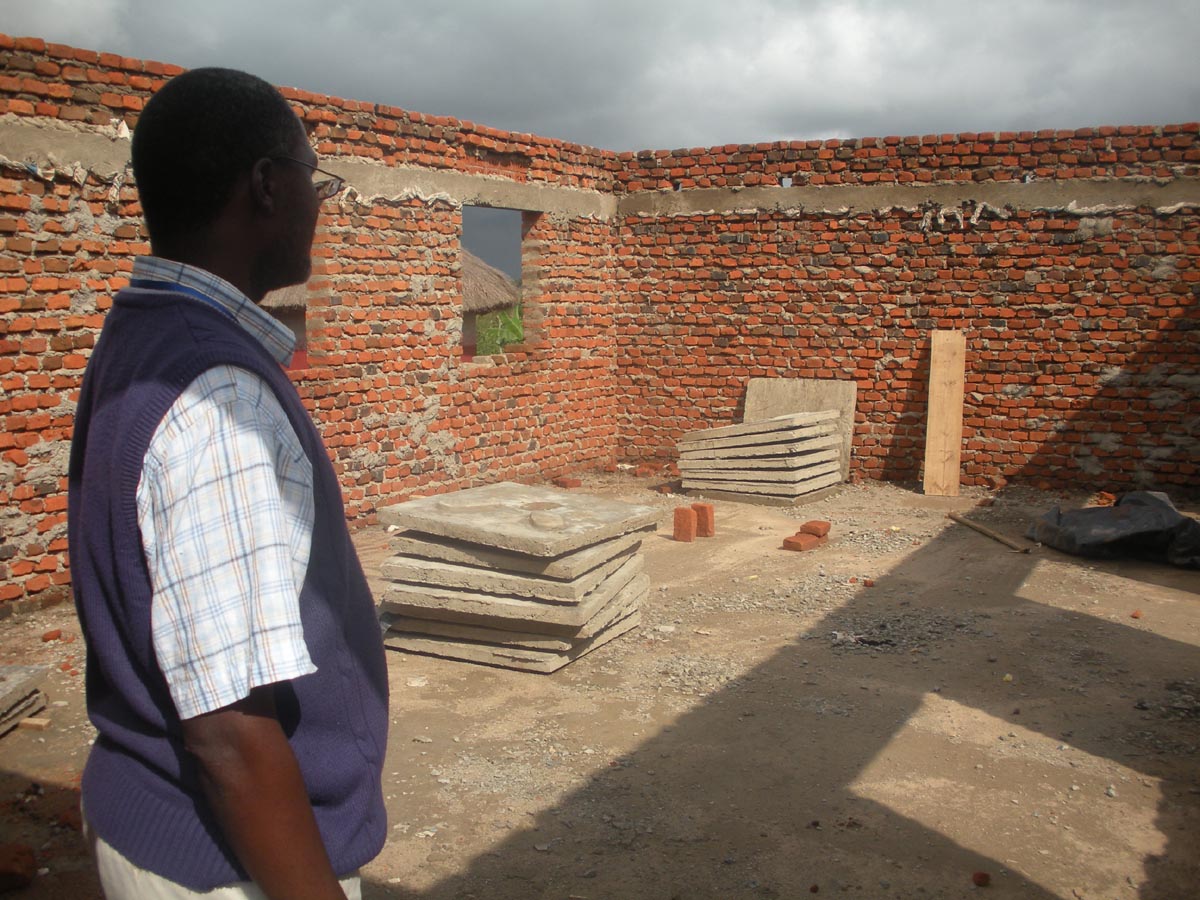
Moses in the room he is building to be a Bee Keeper training centre
The training class for young women - 58 will graduate in December 2011
A typical apiary site - it was nice and tidy and well looked after.
This apiary site was not so well looked after and could have done with some clearing of the under growth.
An Orange orchard which Moses hoped would house a least one apiary.
Saturday, 3 December 2011
Out visiting Children and some beekeeping - 1st Dec
We had planned to leave to visit the children at 9am and in good African tradition we left around 10am.
We headed to Atira school to meet the Headmaster - Richard, he would accompany us on some of the visits. Richard is an amazing man, with vision and the energy to get things done. His whole focus is on the welfare of the children and that of his community. Richard uses some of his land as a 'School Farm' to train the youngsters in farming skills. He is now wanting to get saplings to have a Tree Nursery in this farm and the children can then take the trees back to their homes to plant. He wants the trees to be Bee Friendly and, guess what, he wants to bring beekeeping skills into what he does. He now has a teacher on his staff, Michael - yes a third one so this could get confusing - who is a beekeeping and has a honey processing house. Can I meet him? No problem. So that is a further stop on our program.
Richard takes us to see land that Young Sam's family is renting, with the help of Global Care, so that they can grow casava and be self sufficient in at least some of their food.
Then off to meet some of the children:
Mercy, was first and then she had to dash off to get a 'buda buda' to the hospital for a check up.
Charles we met is one of 14 children being looked after by Rose. Rose is the lay pastor for the local church and works very closely with Richard to help the children.
Jesca - is a lovely girl, young woman actually. When we arrived she dashed off into her home, a mud hut about 10 feet in diameter, and changed out of her normal clothes into her best. Jesca had had a cow bought for her by a donation from sponsor, but unfortunately the cow died.
Gilbert is a very shy, quiet young boy. He too had had a cow bought for him by a donation and he showed it off proudly for me to take a photo. Well he did once he had caught it, which was great fun to watch. One of the gifts sent to Gilbert was a pair of binoculars. Gilbert was fascinated, he could not understand why things were so close to him when he looked through them.
As we were leaving Gilbert's home, his Uncle (his guardian) gave me a gift of a live chicken. I was advised by David (Global Care) that I could not refuse. These people have nothing but they are so generous with what they do have that it puts us to shame when we have so much and hold onto it.
Then we visited Michael -Teacher & Beekeeper. WOW it was a treasure trove of beekeeping equipment which was actually being used. Michael runs several Langstroth hives. He has a brick built honey processing shed that is bee proof and in that two stainless steel manual extractors a settling tank and storage buckets. These he used to extract and process his own honey. The frames in the langstroth supers he baited like Top Bars and that seemed to work fine for him. He is trying to set up an association locally one of the people interested i it is Gilbert's uncle.
We then visited young Sam's home to meet with his aunt and sister and also to pay my respects for his Grandfather who died recently.
Two years ago Cathy's eldest son Alex had used money from his 16th Birthday to but Sam a she goat. We had not heard much more, so I was amazed and delighted to get to Sam's home and find out that the one goat was now FIVE. Richard said that after the next set of kids were born Sam could sell some of the goats and buy a Cow. This is the evidence of how giving someone a 'Hand UP' can change their lives. For Sam this is like money in the bank gaining interest so that when he is older he will be able to sell some of his animals and pay for his further education.
We went to the Global Care centre and a quick break and then I went beekeeping with Michael and big Sam. The job was to look at the empty KTBs ( four of them), make sure they were clea, remove the wire queen excluder and re-bait them.
The first hive had a squirrel nest in it. The second a wasp nest and the othet two just need a tidy up. But I did reinforce to both Sam and Michael the need for regular checking of empty hives.
What a day.
We headed to Atira school to meet the Headmaster - Richard, he would accompany us on some of the visits. Richard is an amazing man, with vision and the energy to get things done. His whole focus is on the welfare of the children and that of his community. Richard uses some of his land as a 'School Farm' to train the youngsters in farming skills. He is now wanting to get saplings to have a Tree Nursery in this farm and the children can then take the trees back to their homes to plant. He wants the trees to be Bee Friendly and, guess what, he wants to bring beekeeping skills into what he does. He now has a teacher on his staff, Michael - yes a third one so this could get confusing - who is a beekeeping and has a honey processing house. Can I meet him? No problem. So that is a further stop on our program.
Richard takes us to see land that Young Sam's family is renting, with the help of Global Care, so that they can grow casava and be self sufficient in at least some of their food.
Then off to meet some of the children:
Mercy, was first and then she had to dash off to get a 'buda buda' to the hospital for a check up.
Charles we met is one of 14 children being looked after by Rose. Rose is the lay pastor for the local church and works very closely with Richard to help the children.
Jesca - is a lovely girl, young woman actually. When we arrived she dashed off into her home, a mud hut about 10 feet in diameter, and changed out of her normal clothes into her best. Jesca had had a cow bought for her by a donation from sponsor, but unfortunately the cow died.
Gilbert is a very shy, quiet young boy. He too had had a cow bought for him by a donation and he showed it off proudly for me to take a photo. Well he did once he had caught it, which was great fun to watch. One of the gifts sent to Gilbert was a pair of binoculars. Gilbert was fascinated, he could not understand why things were so close to him when he looked through them.
As we were leaving Gilbert's home, his Uncle (his guardian) gave me a gift of a live chicken. I was advised by David (Global Care) that I could not refuse. These people have nothing but they are so generous with what they do have that it puts us to shame when we have so much and hold onto it.
Then we visited Michael -Teacher & Beekeeper. WOW it was a treasure trove of beekeeping equipment which was actually being used. Michael runs several Langstroth hives. He has a brick built honey processing shed that is bee proof and in that two stainless steel manual extractors a settling tank and storage buckets. These he used to extract and process his own honey. The frames in the langstroth supers he baited like Top Bars and that seemed to work fine for him. He is trying to set up an association locally one of the people interested i it is Gilbert's uncle.
We then visited young Sam's home to meet with his aunt and sister and also to pay my respects for his Grandfather who died recently.
Two years ago Cathy's eldest son Alex had used money from his 16th Birthday to but Sam a she goat. We had not heard much more, so I was amazed and delighted to get to Sam's home and find out that the one goat was now FIVE. Richard said that after the next set of kids were born Sam could sell some of the goats and buy a Cow. This is the evidence of how giving someone a 'Hand UP' can change their lives. For Sam this is like money in the bank gaining interest so that when he is older he will be able to sell some of his animals and pay for his further education.
We went to the Global Care centre and a quick break and then I went beekeeping with Michael and big Sam. The job was to look at the empty KTBs ( four of them), make sure they were clea, remove the wire queen excluder and re-bait them.
The first hive had a squirrel nest in it. The second a wasp nest and the othet two just need a tidy up. But I did reinforce to both Sam and Michael the need for regular checking of empty hives.
What a day.
Arrival at Soroti - 30th
Cathy and I have visited Soroti several times with the Coventry based charity Global Care ( www.globalcare.org.uk )and through them we sponsor a young boy, Sam, who lives in a village near Soroti.
Yesterday (28th) I had heard that young Sam had collapsed and rushed to hospital where he was undgoing test for Malaria, or worse.
However today (29th) I got word that Sam was still in hospital but improving.
The trip from Bukedea was uneventful, not like the one from Mbale to Bukedea when we saw a cow, that had recently been slaughtered, being butchered by the roadside, just lying on (what I would loosely call) the pavement.
It was great to get to the Global Care Centre at Soroti and meet old friends. This was my fourth visit and whilst the buildings keep changing and improving I am always greeted by the same happy smiling faces.
I was told that Sam continued to improve and i would be going to see him in the hospital the next day.
I met the new manager, Michael, who himself was sponsored by Global care as a young boy. Then I met with Michael (another one) and Sam (another one) to arrange visit the apiary here in Soroti and do some training.
I also had another very enjoyable task to do while in Soroti, which is delivering, on behalf of sponsors, gifts to their children. David had organised this, so tomorrow I would be going out into the bush to visit the homes of 4 of the children and then of Friday the remaining four would come to the centre to meet me.
My short time that I was going to be in Soroti was already filled with activities from morning till night.
Still worried about young Sam, I had an early night.
Yesterday (28th) I had heard that young Sam had collapsed and rushed to hospital where he was undgoing test for Malaria, or worse.
However today (29th) I got word that Sam was still in hospital but improving.
The trip from Bukedea was uneventful, not like the one from Mbale to Bukedea when we saw a cow, that had recently been slaughtered, being butchered by the roadside, just lying on (what I would loosely call) the pavement.
It was great to get to the Global Care Centre at Soroti and meet old friends. This was my fourth visit and whilst the buildings keep changing and improving I am always greeted by the same happy smiling faces.
I was told that Sam continued to improve and i would be going to see him in the hospital the next day.
I met the new manager, Michael, who himself was sponsored by Global care as a young boy. Then I met with Michael (another one) and Sam (another one) to arrange visit the apiary here in Soroti and do some training.
I also had another very enjoyable task to do while in Soroti, which is delivering, on behalf of sponsors, gifts to their children. David had organised this, so tomorrow I would be going out into the bush to visit the homes of 4 of the children and then of Friday the remaining four would come to the centre to meet me.
My short time that I was going to be in Soroti was already filled with activities from morning till night.
Still worried about young Sam, I had an early night.
Apoolo An Angar - 30th
I checked out of the guest house as tonight I would be in Soroti. We left Mbale, looking as if rain was imminent, heading for Bukedea.
Bukedea town is on the main Mbale Soroti road so Charles found it with no trouble. However finding Apoola Na Agar was a different story. Asking the locals did not help as they did not speak english. A few phone calls to Moses and we eventually found it.
Started in 2003 it is an impressive set of brick buildings within its own fenced compound. The focus to date has been on health education, they employ their own nurse, and skills training for women.
In December 8 young women will graduate from their Sewing and tayloring course.
With the land they have they also train people in agricultural skill, both crops and livestock. Moses wishes to develop this into Beekeeping and is already in the process of building a Beekeeping Classroom. The walls are up and the roof is the next stage.
Moses firmly believes that Beekeeping is a low cost activity that will increase the incomes of the local communities. He has plans to start with 200 hives spread around about 40 communities, building this up to 1,200 hives. On the honey processing and marketing side he envisages establishing a central collection, processing and marketing point.
There is limited beekeeping skill in the area and initial training will be a big issue, as will the availability on day to day support.
Moses took us to two potential apiary sites explaining his plans for 'bee friendly' tree planting as we went.
Moses is an interesting man, his has a huge vision to help his wider community and so far he has delivered on the things he has set his mind to.
Bukedea town is on the main Mbale Soroti road so Charles found it with no trouble. However finding Apoola Na Agar was a different story. Asking the locals did not help as they did not speak english. A few phone calls to Moses and we eventually found it.
Started in 2003 it is an impressive set of brick buildings within its own fenced compound. The focus to date has been on health education, they employ their own nurse, and skills training for women.
In December 8 young women will graduate from their Sewing and tayloring course.
With the land they have they also train people in agricultural skill, both crops and livestock. Moses wishes to develop this into Beekeeping and is already in the process of building a Beekeeping Classroom. The walls are up and the roof is the next stage.
Moses firmly believes that Beekeeping is a low cost activity that will increase the incomes of the local communities. He has plans to start with 200 hives spread around about 40 communities, building this up to 1,200 hives. On the honey processing and marketing side he envisages establishing a central collection, processing and marketing point.
There is limited beekeeping skill in the area and initial training will be a big issue, as will the availability on day to day support.
Moses took us to two potential apiary sites explaining his plans for 'bee friendly' tree planting as we went.
Moses is an interesting man, his has a huge vision to help his wider community and so far he has delivered on the things he has set his mind to.
Tuesday, 29 November 2011
The Training Day - (where have I heard that before ) 29th
My effort - modelled by Charles - some veil trimming needed
We leave for the OYAG group stopping to buy another three pairs of scissors on the way.
We arrive at the village on-time and we are the first there. Other members are still having to finish their daily chores and in the fields before coming to this.
By 10.30 a group of 15 people4 have arrived including two from the KAWO group, we are ready to start.
I take advantage of the delay to ask for a fire to be lit and then practice on an old piece of maize sacking with a hot stick. I get the hang of it but not before a make a few big holes.
I start of by showing them the suit I have made and telling them how much it cost. Would they like to learn to make their own? A resounding yes and loud clapping so we get started.
I have enough material to make three more suits and I decide to start of the tops as that is the most useful part should we run out of time today.
I show the group what to do and I am promptly pushed off the mat as the groups of people start on their own materials.
Work goes quickly and the skill of singeing the cut edges of the sacking is quickly mastered. No need for parcel tape here.
There are one or two early accidents with bad cuts of burnt holes but nothing that cannot be mended.
There is not lack of volunteers to model the suits as they start to take shape or to be measured before holes are cut. I draw the line at taking inside leg measurements but that just adds to the fun as the young men laugh and joke as they go about this work. A scene form 'Are you being served'.
The sewing skills of both men and women are remarkable and in no time at all the main bodice with arms of all three suits are finished.
Rather than do the hood I now concentrate on the trousers and with very little instruction the groups are away. I am standing in the background watching and giving practical advice and help where it is needed.
This group is working well together, is motivated and is having fun. The air is filled with a buzz ( and I use that word deliberately), laughter rings around the village.
Once the trousers are completed four of the men insist on wearing them to model for the rest of the group then to work in.
The hoods are a little more complicated but are no trouble for the group. One group is slower than the others but then their stitching is infinitely better.
By 3pm all three suits are finished and with whoops of glee they are put on and paraded round and round the centre of the village.
Time for a group photo and also to say good-bye.
I leave the remaining material, needles etc with the groups to share and Akol assures me that he will meet with the KAWO group and share plans and knowledge. The KAWO group take home with them the beesuit they have made and the knowledge they have gained.
We leave to head back to Mbale a job well done.
It is nice when a plan comes together.
Getting the fire lit - why does it take ten men to do it?
Akole, who is 6' 3" in my effort of a beesuit.
Singeing the edges of the sacking - practice
Initial cutting out
Group full of Buzzy Buzzy
They all wanted to model the suits.
Once on they would not take them off.
Group Photo for the album
Group photo - with energy.
The KAWO visit - 28th
KAWO means Bee.
We had arranged to meet the group at 11am because I did not know how far it was from Mbale. We left at 9.30am, having done a little shopping and arrived at the meeting place at 10.15am. I caused panic as they were not ready but did not want me to wait.
We had a discussion with the group, which included a Bee keeping consultant/trainer before heading out into the bush to visit two of the four sites.
The group already had bee hives, mainly KTBs but some Langstroth and had harvested a small amount of honey. The protective clothing they had was a heavy cotton full beesuit that had cost a fortune and a set of old overalls with buttons and no zips
The road into the bush was ok , better than the main road and after 9km we came to the first village.
This village was well organised and had planted large areas of land with Citrus trees and were now starting to plant Mangos and sunflowers. They had a plan to plant crops such that there was forage for the bees all year round.
I was told that the citrus crop had increased markedly since the bee hives had been populated, harvesting 35 bags this year.
Some members of Committee of the KAWO group
Handing over Bees Abroad Training Manuals - the ones posted in january from the UK had also arrived safely.
The Citrus Orchard where over 300 trees had been planted
MUlti storey KTBs - don't know how they manage the bottom one without disturbing the top one.
Plastic bags and grease around hive stands to stop the ants.
Some of the potential beneficiaries from the bee keeping project
The second village was a further 5km into the bush along a single track road which we had to drive along with care. Making sure the growth at the side of the track did not hide any holes or old tree stumps, either of which would do big damage to the car.
This village was not as well organised and the people were poor, mainly widows and orphans.
Second site for planned KTBs
KTBs in situ but not very accessible for harvesting and management.
Members of the group in the second village.
The track home.
After the meeting I arranged with Akole that members of the KAWO group could attend the training session at his village. Until my visit they were not aware of each other, despite being only 20km apart and both keen to use beekeeping to alleviate poverty. In John's terms this could be "Buzz group"
I work late when we get back and finish the Beesuit ready for the training tomorrow. No photos of the completed one yet though.
We had arranged to meet the group at 11am because I did not know how far it was from Mbale. We left at 9.30am, having done a little shopping and arrived at the meeting place at 10.15am. I caused panic as they were not ready but did not want me to wait.
We had a discussion with the group, which included a Bee keeping consultant/trainer before heading out into the bush to visit two of the four sites.
The group already had bee hives, mainly KTBs but some Langstroth and had harvested a small amount of honey. The protective clothing they had was a heavy cotton full beesuit that had cost a fortune and a set of old overalls with buttons and no zips
The road into the bush was ok , better than the main road and after 9km we came to the first village.
This village was well organised and had planted large areas of land with Citrus trees and were now starting to plant Mangos and sunflowers. They had a plan to plant crops such that there was forage for the bees all year round.
I was told that the citrus crop had increased markedly since the bee hives had been populated, harvesting 35 bags this year.
Some members of Committee of the KAWO group
Handing over Bees Abroad Training Manuals - the ones posted in january from the UK had also arrived safely.
The Citrus Orchard where over 300 trees had been planted
MUlti storey KTBs - don't know how they manage the bottom one without disturbing the top one.
Plastic bags and grease around hive stands to stop the ants.
Some of the potential beneficiaries from the bee keeping project
The second village was a further 5km into the bush along a single track road which we had to drive along with care. Making sure the growth at the side of the track did not hide any holes or old tree stumps, either of which would do big damage to the car.
This village was not as well organised and the people were poor, mainly widows and orphans.
Second site for planned KTBs
KTBs in situ but not very accessible for harvesting and management.
Members of the group in the second village.
The track home.
After the meeting I arranged with Akole that members of the KAWO group could attend the training session at his village. Until my visit they were not aware of each other, despite being only 20km apart and both keen to use beekeeping to alleviate poverty. In John's terms this could be "Buzz group"
I work late when we get back and finish the Beesuit ready for the training tomorrow. No photos of the completed one yet though.
Shopping and making a Beesuit - 27th
The day starts off warm - as usual. The norm is for warm in the morning then thunderstorms around 4pm and rain overnight.
After breakfast off into Mbale to get the shopping I need to make my first Beesuit from maize flour sacks. Overnight Mary has sent me texts and instructions on what has to be done. I am already aware of the process having spoken to both Mary and John about this at some length when we were still in the UK.
The biggest problem I have is that I do not have access to an open fire at the guest House, so cannot melt the cut seams of the Maize sacks to stop them fraying and - quite literally - falling apart. I have decide to get some insulating tape, or the like, and stick the bags with this and then cut through this and the bags.
I later find that the roll of Parcel tape in my luggage is brilliant for this job. So I guess Sellotape would do the same.
The market is in full swing when we get to the town centre, and it is nice and sunny
The shopping goes OK apart from getting the maize sacks nand the needles took a lot of tracking down. We were directed into the centre of the market for the maize sacks but as a Mzungu I stood out a little and we were getting harassed increasingly by people to buy their goods. We saw a guy across the road filling empty sacks with flour so I asked him if he had any to sell, he didn't but offered to go into the market and get what I wanted - brilliant. Five minutes later we had the sacks and were on our way back to the Guest House.
I took over a couple of tables in the courtyard and set to work. Ordering the occasional Soda so as not to be asked to leave. As my work progress I got ever increasing funny looks from the staff and other guests who passed by.
The Starter kit from the market. I bought enough to make four suits - in for a penny in for a pound. My rough costings put the cost per suit at about 6,500 schillings (1.80 in sterling) plus my labour. Professionally made beesuits cost 250,000 schillings here - a bit of a saving.
Start on the easy bits the legs. But do you know how difficult it is to measure your own inside leg? Tip number 1 - leave plenty room to grow.
This bit is easy too, just three cuts in a sack but the edges need stitching to stop the fraying.
Getting more complicated now - I didn't know my arms were that long.
I am pleased at my rudimentary sewing skill. The needles I bought are huge so I can thread them easily with doubled up thread. The seams may not be too straight but they appear to be holding and are certainly bee proof.
It eventually got too dark to work outside and that and the mosquitoes drove me indoors to my room to continue the work.
After breakfast off into Mbale to get the shopping I need to make my first Beesuit from maize flour sacks. Overnight Mary has sent me texts and instructions on what has to be done. I am already aware of the process having spoken to both Mary and John about this at some length when we were still in the UK.
The biggest problem I have is that I do not have access to an open fire at the guest House, so cannot melt the cut seams of the Maize sacks to stop them fraying and - quite literally - falling apart. I have decide to get some insulating tape, or the like, and stick the bags with this and then cut through this and the bags.
I later find that the roll of Parcel tape in my luggage is brilliant for this job. So I guess Sellotape would do the same.
The market is in full swing when we get to the town centre, and it is nice and sunny
The shopping goes OK apart from getting the maize sacks nand the needles took a lot of tracking down. We were directed into the centre of the market for the maize sacks but as a Mzungu I stood out a little and we were getting harassed increasingly by people to buy their goods. We saw a guy across the road filling empty sacks with flour so I asked him if he had any to sell, he didn't but offered to go into the market and get what I wanted - brilliant. Five minutes later we had the sacks and were on our way back to the Guest House.
I took over a couple of tables in the courtyard and set to work. Ordering the occasional Soda so as not to be asked to leave. As my work progress I got ever increasing funny looks from the staff and other guests who passed by.
The Starter kit from the market. I bought enough to make four suits - in for a penny in for a pound. My rough costings put the cost per suit at about 6,500 schillings (1.80 in sterling) plus my labour. Professionally made beesuits cost 250,000 schillings here - a bit of a saving.
Start on the easy bits the legs. But do you know how difficult it is to measure your own inside leg? Tip number 1 - leave plenty room to grow.
This bit is easy too, just three cuts in a sack but the edges need stitching to stop the fraying.
Getting more complicated now - I didn't know my arms were that long.
I am pleased at my rudimentary sewing skill. The needles I bought are huge so I can thread them easily with doubled up thread. The seams may not be too straight but they appear to be holding and are certainly bee proof.
It eventually got too dark to work outside and that and the mosquitoes drove me indoors to my room to continue the work.
Subscribe to:
Posts (Atom)